
HIPAA Certification – Complete Guide to HIPAA Compliance Certification and Training
HIPAA Certification helps healthcare organizations, healthcare professionals, business associates, and medical service providers understand and implement the requirements of the Health Insurance Portability and Accountability Act (HIPAA). The HIPAA certification process typically includes HIPAA compliance training, risk assessments, privacy and security awareness, workforce education, and implementation of safeguards to protect Protected Health Information (PHI). By obtaining HIPAA certification, organizations can strengthen data security, ensure regulatory compliance, reduce compliance risks, protect patient information, and demonstrate their commitment to healthcare privacy and information security best practices.
Organizations that handle Protected Health Information (PHI) must comply with the Health Insurance Portability and Accountability Act (HIPAA) to ensure the privacy, security, and confidentiality of patient data. HIPAA Certification helps healthcare providers, business associates, health plans, and healthcare technology companies demonstrate their commitment to HIPAA compliance and data protection. By implementing HIPAA requirements, organizations can reduce compliance risks, strengthen information security, and build trust with patients, partners, and stakeholders.
HIPAA Certification demonstrates an organization's commitment to protecting patient information, maintaining healthcare data privacy, and complying with HIPAA regulations and industry best practices.
Achieving HIPAA compliance helps organizations reduce security risks, prevent data breaches, improve regulatory compliance, and enhance patient confidence in their healthcare services.
What is HIPAA Certification?
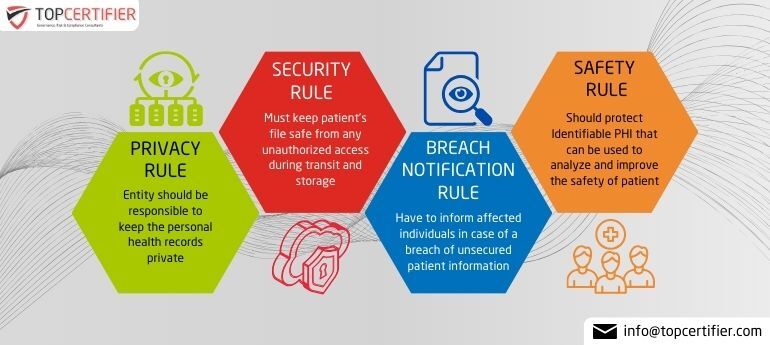
HIPAA (Health Insurance Portability and Accountability Act) is a U.S. federal law designed to safeguard sensitive patient health information from unauthorized access, disclosure, or misuse. HIPAA Certification demonstrates that an organization has implemented appropriate administrative, physical, and technical safeguards to protect Protected Health Information (PHI). The certification process typically includes HIPAA compliance assessments, workforce training, risk analysis, policy development, and ongoing monitoring to ensure compliance with HIPAA Privacy, Security, and Breach Notification Rules.
Organizations that achieve HIPAA compliance benefit from stronger data protection, improved patient trust, reduced legal and financial risks, enhanced operational efficiency, and greater confidence when working with healthcare providers, insurers, and business partners. HIPAA Certification also serves as evidence of an organization's commitment to healthcare data security and regulatory compliance.
Why is HIPAA Certification Important?
Healthcare organizations, medical practices, health plans, and business associates regularly handle sensitive patient information. HIPAA Certification provides a structured framework for protecting this information through effective security controls, privacy policies, employee awareness, and risk management practices. HIPAA compliance helps organizations avoid costly penalties, strengthen cybersecurity defenses, improve patient confidence, and demonstrate their commitment to maintaining the confidentiality, integrity, and availability of healthcare data.
Achieve HIPAA Certification : A Strategic 10-Step Compliance Approach
1. Initial HIPAA Compliance Consultation
We evaluate your organization's current compliance status, healthcare data handling processes, and HIPAA requirements to establish a compliance roadmap.
2. Define Scope and Compliance Objectives
Identify systems, departments, employees, and business associates that handle Protected Health Information (PHI).
3. HIPAA Gap Analysis
Assess existing controls, policies, and procedures against HIPAA Privacy, Security, and Breach Notification Rule requirements.
4. Policy and Procedure Development
Develop or update HIPAA policies, security procedures, and compliance documentation to address identified gaps.
5. HIPAA Compliance Training
Provide HIPAA awareness and compliance training to employees responsible for handling patient information.
6. Risk Assessment and Security Controls
Implement administrative, physical, and technical safeguards to protect healthcare data and reduce security risks.
7. Internal Compliance Audit
Conduct internal audits to evaluate HIPAA compliance readiness and identify areas requiring improvement.
8. Corrective Actions and Improvements
Address non-conformities, strengthen controls, and implement corrective measures to achieve compliance objectives.
9. Compliance Review and Validation
Review implemented safeguards and verify that all HIPAA requirements are effectively addressed.
10. Maintain HIPAA Compliance
Establish continuous monitoring, employee training, and periodic risk assessments to sustain HIPAA compliance.
Organizations seeking HIPAA Certification can strengthen healthcare data security, improve regulatory compliance, and build patient trust through a structured compliance approach.
HIPAA Compliance Success Story
- Multi-Specialty Healthcare Clinic Strengthened Patient Data Security: A growing healthcare clinic handling thousands of patient records identified gaps in its HIPAA compliance program. With TopCertifier's guidance, the organization conducted a comprehensive HIPAA gap analysis, implemented enhanced access controls, updated privacy policies, and provided HIPAA compliance training to all employees. As a result, the clinic improved the security of Protected Health Information (PHI), reduced compliance risks, and achieved greater confidence in its ability to meet HIPAA requirements.
- Healthcare Technology Provider Improved HIPAA Compliance Readiness: A healthcare software company that processes sensitive patient information sought to strengthen its data protection practices. Through HIPAA risk assessments, security control implementation, workforce training, and internal compliance reviews, the organization improved its security posture and established a robust compliance framework. This helped the company enhance customer trust and demonstrate its commitment to healthcare data privacy and security.
- Medical Billing Organization Reduced Compliance Risks: A medical billing services provider managing large volumes of Protected Health Information (PHI) partnered with TopCertifier to improve its HIPAA compliance program. By implementing stronger administrative safeguards, conducting employee awareness training, and establishing regular compliance monitoring procedures, the organization significantly reduced operational risks and improved overall compliance performance.
These HIPAA compliance success stories demonstrate how healthcare organizations, healthcare technology providers, and business associates can strengthen data security, protect patient information, and improve regulatory compliance through a structured HIPAA compliance program. Effective HIPAA implementation helps organizations reduce risks, prevent data breaches, build patient trust, and maintain long-term healthcare information security.
Why Choose TopCertifier for HIPAA Certification?
TopCertifier helps healthcare organizations, medical practices, health plans, and business associates achieve HIPAA compliance through expert consulting, gap analysis, risk assessments, employee training, and compliance support. Our practical approach simplifies the HIPAA certification process while helping organizations meet Privacy, Security, and Breach Notification Rule requirements.
With extensive experience in healthcare compliance, TopCertifier helps organizations protect Protected Health Information (PHI), reduce compliance risks, strengthen data security, and improve regulatory readiness. Our customized solutions enable clients to achieve HIPAA compliance efficiently while building patient trust and maintaining long-term compliance.
Related HIPAA Resources
HIPAA Templates Free Download
Our Security Services
- TPRM Service
- SIEM Service
- SOC and NOC Service
- SOC as a Service
- NOC as a Service
- SSAE 18 and SSAE 16 Report
- ISAE 3402 and ISAE 3000 Report
- SSAE 3402 and SSAE 3000 Report
- SOX Attestation
- US GAAP Audit and Reporting
- CPA Firm
- Smeta Audit Service
ISO Certifications
- ISO 9001 Certification - Quality Management System
- ISO 14001 Certification - Environmental Management
- ISO 45001 Certification
- ISO 22000 Certification - Food Safety Management System
- ISO 27001 Certification - Information Security Management
- CMMI Certification - Capability Maturity Model Integration
- EU GDPR Certification - General Data Protection Regulation
- HIPAA Certification – Health Insurance Portability and Accountability Act
- PCI DSS Certification - Payment Card Industry
- SOC 2 Certification - System Organisation Standard
Frequently Asked Questions
HIPAA Certification demonstrates an organization's commitment to protecting Protected Health Information (PHI) and complying with the requirements of the Health Insurance Portability and Accountability Act (HIPAA).
HIPAA Certification is beneficial for healthcare providers, hospitals, clinics, health plans, medical billing companies, healthcare software providers, and business associates that handle Protected Health Information (PHI).
HIPAA Certification helps organizations strengthen healthcare data security, improve regulatory compliance, reduce privacy risks, protect patient information, and build trust with patients and business partners.
HIPAA Compliance Training typically covers HIPAA Privacy Rules, Security Rules, Breach Notification requirements, patient rights, workforce responsibilities, and best practices for safeguarding Protected Health Information (PHI).
Protected Health Information (PHI) refers to any individually identifiable health information, including medical records, treatment details, insurance information, and other data related to a patient's health condition.
HIPAA Compliance helps organizations protect sensitive patient information, prevent data breaches, meet regulatory requirements, and maintain the confidentiality, integrity, and availability of healthcare data.
The primary HIPAA rules include the Privacy Rule, Security Rule, Breach Notification Rule, and Enforcement Rule, which collectively establish requirements for protecting healthcare information.
Organizations can achieve HIPAA compliance through risk assessments, policy implementation, employee training, security controls, internal audits, ongoing monitoring, and continuous improvement of compliance practices.
Organizations that handle Protected Health Information (PHI) are expected to comply with HIPAA requirements. HIPAA Certification helps demonstrate a commitment to maintaining healthcare data privacy and security.
HIPAA Compliance refers to meeting the requirements of HIPAA regulations, while HIPAA Certification is often used to demonstrate that an organization has implemented policies, controls, and training aligned with HIPAA requirements.
Client Review


GLOBAL SUPPORT
India| USA| Canada| London| UK| Australia| New Zealand| South Africa| Singapore| Dubai,Uae| Saudi Arabia| SriLanka| Bangladesh| Myanmar| Germany| Malaysia| Fiji| Maldives| Bahrain| Kuwait| Oman| Qatar| Nigeria| Kenya| Lebanon| Iraq| Jordan| Thailand| Philippines| Spain| Turkey| Israel| Iran| Algeria| Angola| Ethiopia| Congo| Belgium| Austria| Portugal| Italy
Our Recent Blogs